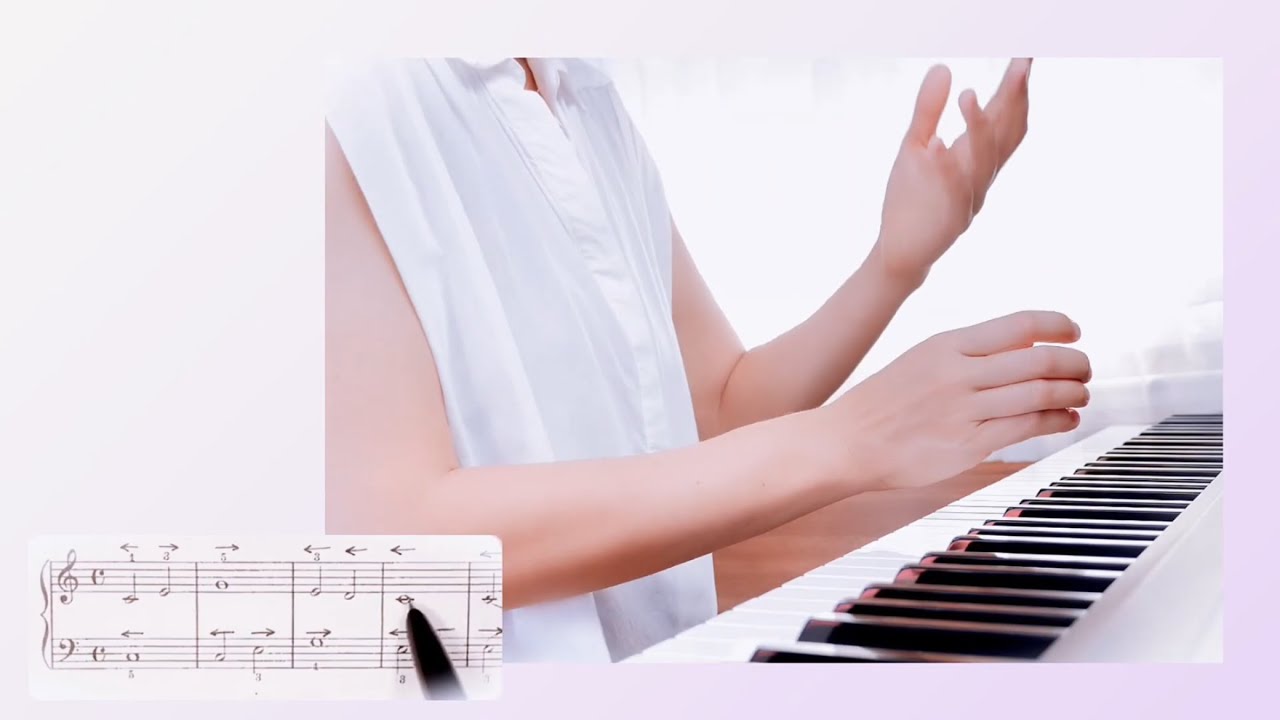
Development
How the capacities are developed
The 6-hour progressive inner-hearing demonstration.
Translating complex ideas into simple terms
For almost thirty years, I have explored this relationship through piano practice and teaching. Here I share the exercises, the questions they have raised, and an invitation to those who would like to help develop and investigate the work further.
“Before beginning to learn an instrument, the learner… should already be spiritually in possession of some music… carry it in his mind, keep it in his heart, and hear it with his mind’s ear. The whole secret of talent and of genius is that… music lives a full life in his brain before he even touches a keyboard…”The Art of Piano Playing · Heinrich Neuhaus
Inner Music · Founding Conversations
For almost thirty years, I have explored how written music becomes inner hearing, inner singing, movement, touch and sound. I have now reached a point where I no longer want to explore these questions entirely alone.
I would like to meet pianists, teachers, students and emerging researchers who feel that this direction might also belong to them.
Piano teaching often tells students what sound to produce and what movement to make. What is rarely taught is the internal process connecting them: how to hear unfamiliar music inwardly before playing, and how to let that imagined sound organize movement and touch.
This matters because piano technique does not develop separately from hearing. When the score remains silent inwardly, the body may learn a difficult passage mainly as a sequence of physical actions. This can make the music slower to learn, harder to remember and more dependent on repetition and correction.
A clear inner musical representation gives movement a destination before the key is touched.
The journey I am offering begins precisely there. It follows a progressive path from written notation to inner hearing—and from inner hearing to movement, touch and the resulting sound.
The developmental progression moves
The proposal behind this work is that inner hearing affects not only interpretation, but technique: how the body organizes movement, how efficiently technically demanding music is learned and how directly the imagined sound can be created at the instrument.
If inner hearing can be progressively developed and connected with the body, pianists may be able to learn difficult music with less trial and error, move with greater freedom and hear what they intend before the hands attempt to produce it.
This is the practical and scientific question I would now like to explore with others.
External Approach
Traditional Teaching
The teacher describes the desired result and asks the student to imitate the effect. The body is trained from the outside in.
Internal Approach
The PianoWell System
The student learns to create the feeling — imagining the sound and singing the space between the notes internally so the movement follows naturally. The result is built from the inside out.
What's Missing in Teaching
The larger question
Why technique may begin before movement—and an invitation to pianists, teachers and researchers who want to investigate this relationship.
The practical teaching problem
Why telling a pianist how the music should sound or how the body should move is different from teaching the internal process that produces that result.
Traditional Teaching
The description of the experience — “Imitate the description.”
The PianoWell System
How the experience is created — “Feel the experience.”
A Question at the Heart of PianoWell
A pianist sees a note. But before the finger touches the key, something else may happen: the written symbol can become internally heard sound.
What if that internal experience could be deliberately developed—from pitch to sound quality, harmony, dynamics, voicing, inner singing and eventually movement?
This question sits at the centre of PianoWell: how written music becomes inner sound, musical movement and physical expression before it reaches the instrument.
A Demonstration
Two demonstrations reveal both halves of the work—how the underlying capacities are developed, and how they are used in everyday practice once the volumes have been studied.
Development
The 6-hour progressive inner-hearing demonstration.
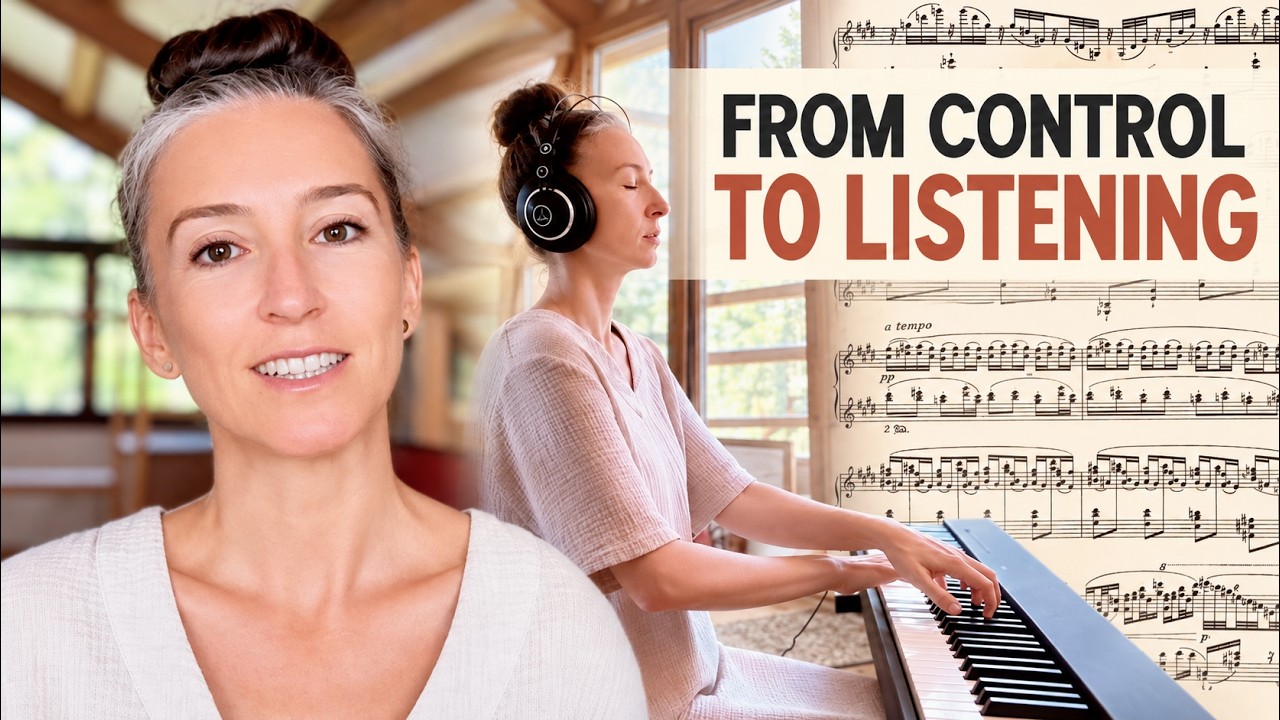
Application
Ravel’s Jeux d’eau After 14 Hours of Practice — one complete practice study, from score preparation to final listening.
If this perspective on practice resonates with you, the complete program guides you how to apply it into your daily work.
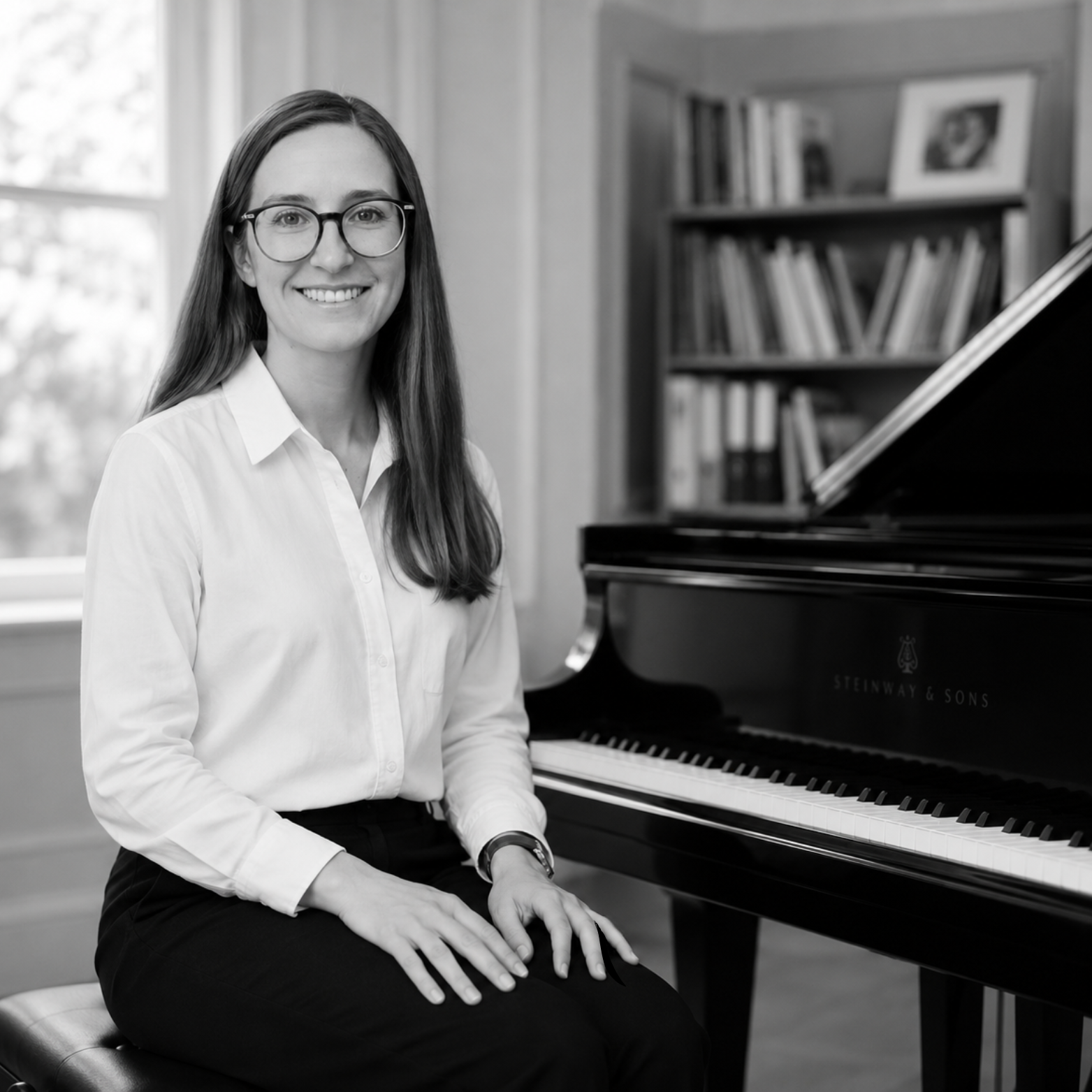
My Journey & Mission
PianoWell grew from a question that began when I was thirteen:
What actually happens inside a pianist before music becomes sound and movement?
I could be told how a phrase should sound, how the hand should move, or what musical result I should achieve. What I could not find was a sufficiently detailed explanation of the process connecting the written score with the sound I imagined, the musical intention I felt, the movement of the body, and finally the music that emerged from the instrument.
I did not know then that this question would remain with me for nearly thirty years.
I trained from childhood in Moscow’s professional music institutions and later completed a Master’s degree at the Moscow Tchaikovsky Conservatory. My background eventually included twenty years of Russian School training and study with direct students and grand-students of Heinrich Neuhaus.
Yet extensive training and long hours of physical practice did not resolve the difficulties I experienced at the piano. Behind successful performances and competition results were technical limitations, tension and pain, eventually culminating in focal hand dystonia.
There was another difficulty, less visible but ultimately just as important. My inner hearing was poorly developed. I could learn and perform music, but looking at a score did not yet awaken the detailed internal experience of sound that would later become central to my playing.
The more I struggled, the more the original question returned. If the final movement of the hand was only the visible result, what was supposed to happen before it?
When physical repetition could no longer provide the answers, I began rebuilding my playing from the inside out.
My inner hearing developed gradually—from individual imagined sounds toward an increasingly detailed experience of texture, harmony, dynamics, voicing and tonal colour. Inner singing began to connect one note to the next through intonation and gradually expanded into articulation, musical speech, phrasing and form.
At the same time, I began to understand physical technique differently. Wrist and elbow motion, arm weight and posture were no longer isolated mechanical instructions. They became increasingly connected with the sound, direction and musical movement already experienced inwardly.
The relationship worked in both directions. Inner hearing informed physical movement, but physical experience at the instrument also refined what I was able to hear and feel internally. What began as an attempt to solve individual problems gradually revealed a developmental cycle between score, hearing, singing, movement and sound.
After years away from the piano, I returned to the classical repertoire and rebuilt my technique through this process.
What emerged was not a collection of corrections or exercises, but a progressive account of how written music can be transformed into inner sound, inner singing, physical movement and artistic expression.
PianoWell is the result of nearly thirty years of independent practical investigation, recovery, teaching and continued refinement.
At its centre is the process that I could not find explained when I was young: how a pianist learns to decode the movement and direction contained in the score, develops an increasingly precise inner musical representation, connects sound through inner singing, and allows physical movement to express what has already been organized inwardly.
This process begins with fundamental relationships between sound and movement and gradually expands into texture, harmony, dynamics, voicing, articulation, musical speech, phrasing and form.
The aim is not to remain consciously occupied with all of these elements forever. They are developed so thoroughly that, eventually, they can begin to work together without constant intervention—leaving the pianist freer to listen, respond and make music.
The PianoWell Program is the form this long investigation has finally taken: a step-by-step path through the questions I once had to explore for myself.
In Her Own Words
Emma Leiuman shares the story behind PianoWell—from her training and injury to the mission of helping pianists rebuild their playing from the inside out.
The Key Innovation
Much has been written about piano technique, motor learning, and musical performance.
Each perspective offers valuable insights. Yet they often explore different stages of the same transformation.
The PianoWell System begins one step earlier—with the written score itself.
Rather than asking how movement creates sound, it asks a different question:
How does a written score become a living musical performance?
Most approaches begin after the score.
The Developmental Cycle
Can inner hearing be developed systematically?
Explore a six-hour demonstration following the progression from sound imagination to musical form.
How to Develop Inner Hearing and AudiationThe PianoWell System begins with Notational Audiation—the process of uncovering the musical information already contained within the notation. From this foundation emerges inner hearing, which in turn gives rise to natural movement that reflects both the written score and the internal musical experience, ultimately leading to artistic sound.
From this perspective, technique, inner hearing, mental practice, interpretation, and artistic expression are not separate abilities to be developed independently. They are different manifestations of the same underlying transformation.
The central question therefore becomes:
What if the score already contains the information that gives rise to inner hearing, movement, interpretation, and artistic expression?
The PianoWell System explores this possibility by treating musical notation not simply as a set of instructions for producing notes, but as the source from which the entire performance process unfolds. Rather than beginning with the hands, the brain, or even the performer's experience, it begins with the written score and investigates how musical notation is transformed into hearing, movement, memory, and ultimately, artistic expression.
Music is created in the invisible world—before the note is even played.
Decoding the musical score into its natural patterns of movement (wrist and elbow motion).
Shaping each sound as a vertical image in the mind (tone, dimension, direction of the sound, harmony, dynamics and voicing), and connecting those sounds through horizontal inner singing (to express arm weight, articulations, musical speech, phrasing, musical form, and artistry).
Allowing the body to express what already exists in the score, mind and voice.
Introducing the System
Emma Leiuman introduces the PianoWell System—how decoding the score, hearing sound inwardly, and freeing the body come together into one complete approach to playing.
Emma Leiuman explores how music lives in the space between the notes—shaping sound through inner singing before the finger ever touches the key.
Tension in the body often begins as tension in the mind. Mental tension arises when musical intentions are not aligned with the written score, and this misalignment originates from an incomplete understanding of how to decode the music itself.
The Chain of Tension
In Their Own Playing
Alberto Pavani
Before & After
View the before-and-afterAlberto Pavani
An 8-day practice routine
Follow his practice sessionMaria Raspopova
Testimonial
Hear Maria’s experienceBruno de Lorenzo
Testimonial
Hear Bruno’s experienceThe Program
The complete programme is available free of charge through illustrated chapters and guided video demonstrations. Study independently, share questions and short practice clips in the Studio, and book an individual lesson when more detailed guidance would be helpful.
Explore the programme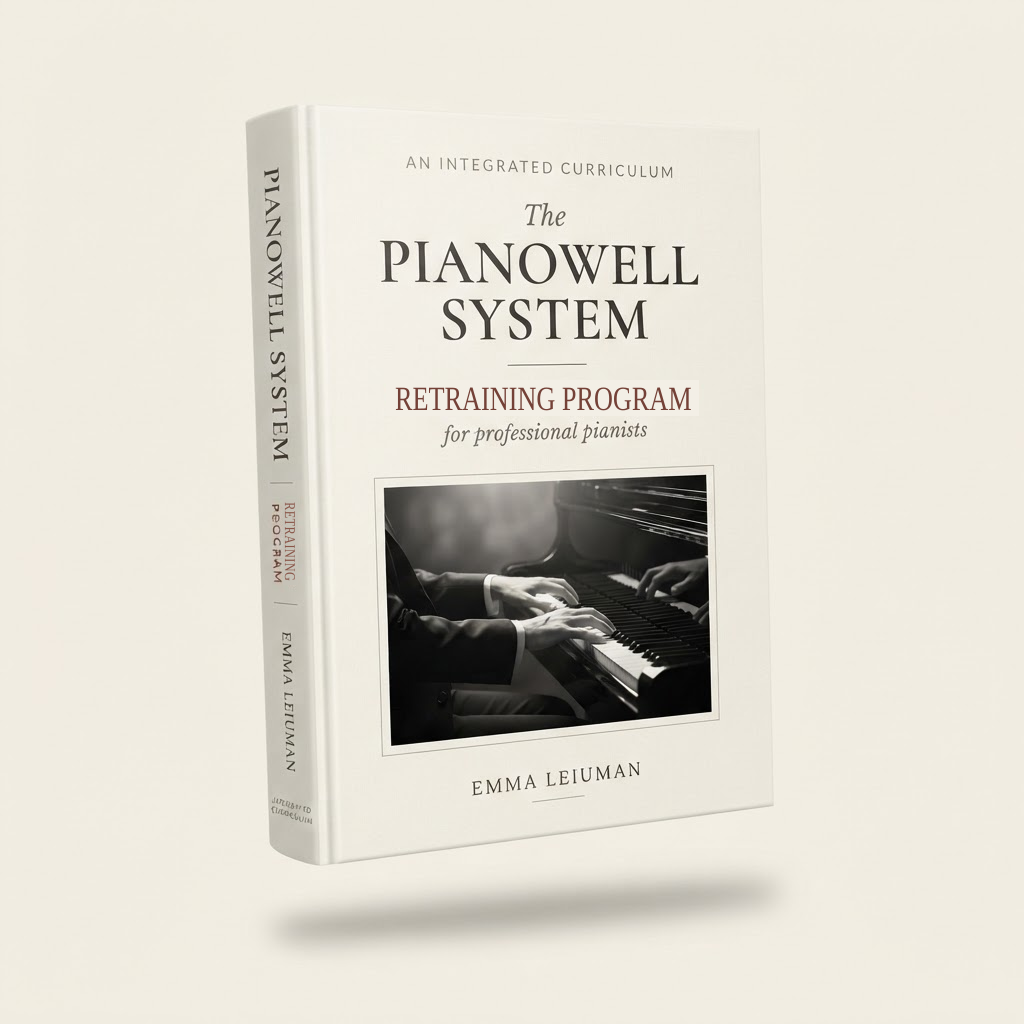
The complete PianoWell framework in one illustrated volume, showing how music is transformed from the written score into sound, movement, and artistic expression—for pianists seeking a deeper understanding of technique, artistry, and performance.
Learn MoreThe Purpose
The purpose of the PianoWell System has never been simply to teach piano technique. Its purpose is to share a way of experiencing music that many pianists never encounter during years of traditional study.
When the musical score is understood differently, something remarkable begins to happen. Instead of fighting the instrument, the body begins to cooperate with the music itself. Instead of constantly correcting mistakes, you gradually learn to create each sound with greater clarity, intention, and confidence. Practice becomes less exhausting and more nourishing. Rather than leaving the piano feeling depleted, you leave feeling calmer, clearer, and deeply connected to the music you have created.
Perhaps the greatest gift of the PianoWell System is not technical freedom, but emotional freedom.
That is the feeling I want to share.
For this reason, The PianoWell Program is offered free of charge, without subscriptions or even an email registration, because the greatest purpose behind it is simply this: to share that feeling with as many pianists as possible.
Knowledge that has the potential to transform a pianist’s relationship with music should be accessible to anyone who genuinely wishes to learn.
If, through this program, even one pianist rediscovers the beauty, freedom, and peace that first inspired them to sit at the piano, then the purpose of sharing it has already been fulfilled.
Listen
The PianoWell System is ultimately judged not by its explanations, but by the music it helps create. These performances reflect the principles presented throughout The PianoWell Program.
A collection of 140 performances recorded over the past fifteen years.
View the complete performance collectionThis is the sound at the heart of the PianoWell System—and the program guides you, step by step, in making it your own.
Research
The teaching materials provide a starting point for a proposed study of inner hearing from notation, its relationship with physical movement and touch, and the resulting sound quality. The research would also examine the feasibility of supported self-study.
Study With Emma
emma@pianowell-system.com · Private lessons €220 / $250 per hour